The 20 Jobs Most at Risk from AI: Is Your Career Safe?
#artificial-intelligence
#ai
#career
#job
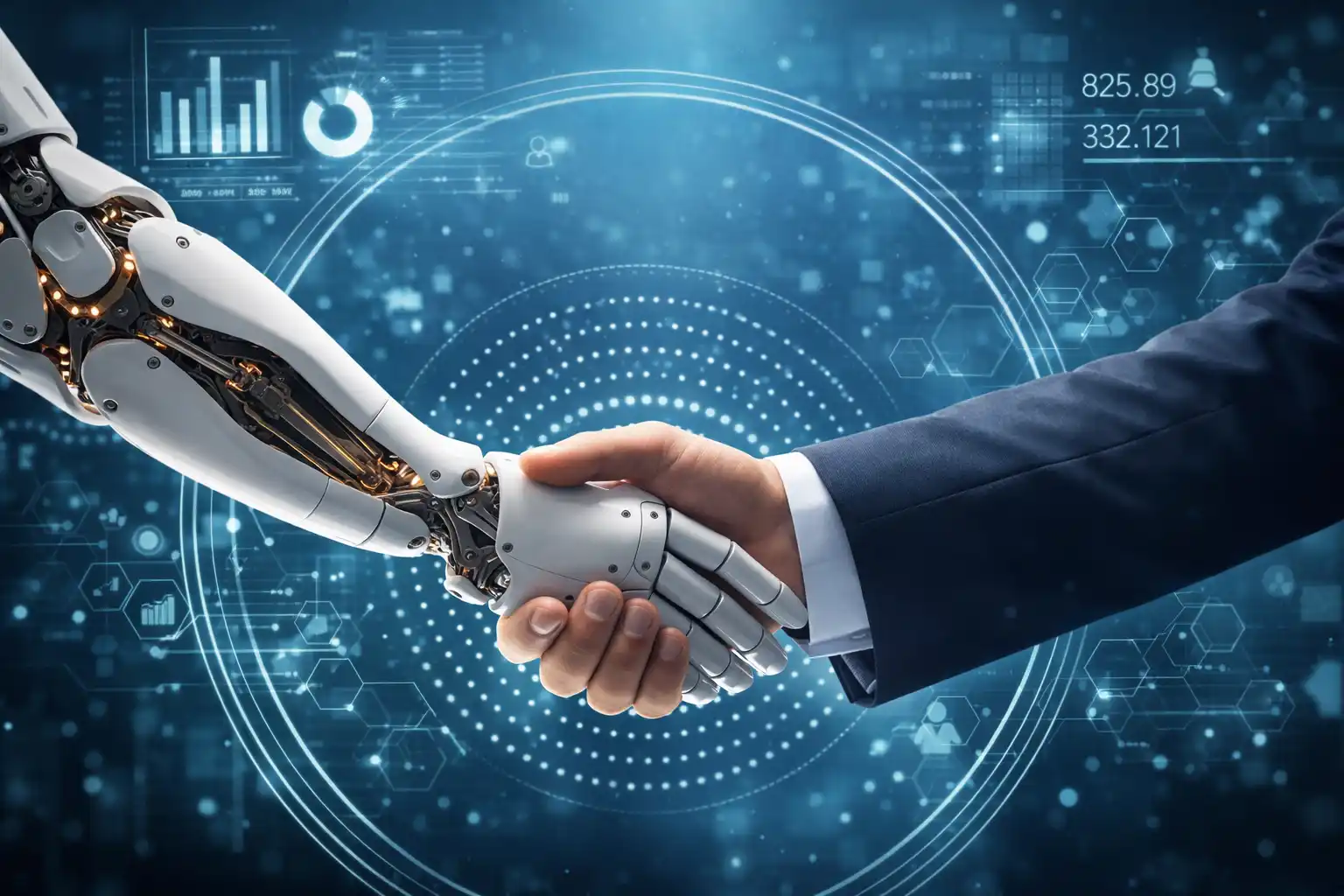
We are currently living through the most significant workplace transformation since the Industrial Revolution. Artificial intelligence is no longer a futuristic concept. it is a coworker, a competitor and a disruptor. From writing code to diagnosing diseases, AI is performing tasks that we once thought only humans could master.
While AI promises massive productivity gains, it also brings a wave of anxiety regarding job security. The vulnerability of a career isn't necessarily about the industry it belongs to, but rather the nature of the tasks performed. Understanding the difference between AI-replaceable tasks (repetitive, data-heavy, rule-based) and AI-resistant roles (emotionally complex, creative and strategic) is the first step in navigating the future of work.
How AI Replaces Certain Jobs
AI doesn't usually "fire" a person overnight. it automates the specific tasks that make up their day. Roles are most at risk when they rely on the following factors:
-
Repetitive Tasks: If a job involves doing the same thing over and over, a machine can likely do it faster and without fatigue.
-
Rule-Based Work: Jobs governed by strict "if-this-then-that" logic are easily coded into algorithms.
-
Data Processing: AI can analyze millions of spreadsheets in seconds, making manual data entry and basic analysis obsolete.
-
Predictable Workflows: Roles that take place in a controlled environment (like a warehouse or a digital form) are prime targets for automation.
Top 20 Jobs That Are the Least AI-Safe in the Era of Automation
Artificial intelligence is transforming the way businesses operate across industries. From data analysis and customer service to logistics and finance, AI systems are becoming faster, more accurate and more cost efficient than traditional manual processes. As a result, some jobs are more vulnerable to automation than others.
It is important to understand that AI does not instantly eliminate entire professions. Instead, it typically automates repetitive, predictable and rules-based tasks within those roles.Over time, if most of the tasks in a job become automated, the demand for that job can decline.
Below are 20 jobs that are considered among the least AI-safe, meaning a large portion of their tasks can already be performed by AI systems, automation software or robotics.
1. Data Entry Clerks
Data entry is one of the most automation-friendly tasks because it involves structured information processing. Modern AI systems can automatically scan documents, extract data from images, classify information and store it in databases.
Technologies such as Optical Character Recognition (OCR) and intelligent document processing platforms can process thousands of documents within minutes. Because of this efficiency, many companies are replacing manual data entry processes with automated pipelines.
2. Telemarketers
Telemarketing has rapidly evolved due to AI-powered voice systems. AI call agents can now initiate calls, follow predefined scripts, answer basic customer questions and record responses automatically.
These systems can operate continuously without fatigue and manage thousands of calls simultaneously, which significantly reduces operational costs for companies.
3. Bookkeeping and Payroll Clerks
Accounting and payroll tasks are increasingly handled by modern financial software. Many platforms automatically categorize transactions, reconcile bank statements, generate invoices, calculate taxes and process payroll.
Automation in accounting software reduces human error and speeds up financial operations, which decreases the need for manual bookkeeping roles focused solely on repetitive financial processing.
4. Customer Service Representatives (Tier-1 Support)
Many companies now use AI chatbots and automated help desks as the first level of customer support. These systems handle routine questions such as:
- password resets
- order tracking
- refund policies
- account updates
Because most customer queries fall into predictable categories, AI systems can resolve a large portion of support tickets before a human agent becomes involved.
5. Proofreaders (Basic Editing)
Basic proofreading tasks such as spelling correction, grammar checking and sentence restructuring are now commonly handled by AI-driven writing tools. These systems can analyze text in real time and suggest improvements instantly.
While professional editing, storytelling and high-level content development still require human expertise, basic proofreading work is increasingly automated.
6. Retail Cashiers
Retail automation has accelerated with technologies such as self-checkout kiosks and automated retail stores. Customers can scan items themselves or simply walk out while automated systems track purchases using sensors and computer vision.
These innovations reduce the need for human cashiers, especially in high-volume retail environments.
7. Courier and Delivery Drivers
Logistics companies are actively experimenting with autonomous delivery technologies. These include self-driving delivery vehicles, sidewalk robots and drone delivery systems.
Although widespread adoption still depends on regulatory and safety approvals, automation in logistics is steadily reducing the reliance on manual delivery roles.
8. Manufacturing Assemblers
Industrial robotics has been used in factories for decades, but modern robots are far more flexible and intelligent than earlier systems. AI-powered robotic arms can now assemble products, perform quality checks and operate continuously with minimal supervision.
As robotics technology becomes cheaper and more adaptable, more manufacturing tasks are shifting from human workers to automated machines.
9. Market Research Analysts (Basic Data Analysis)
AI tools can analyze massive datasets much faster than humans. They can gather information from websites, social media and consumer databases to detect trends and generate reports.
For routine market research tasks such as data aggregation, trend identification and reporting, AI systems can significantly reduce the time required for analysis.
10. Receptionists
Digital scheduling assistants, automated check-in systems and AI voice receptionists are becoming increasingly common in offices, hotels and healthcare facilities.
These systems can manage appointments, answer frequently asked questions and guide visitors without requiring a full-time front desk employee.
11. Translation Services (General Translation)
Neural machine translation has improved dramatically in recent years. AI translation tools can instantly translate emails, website content and documentation between multiple languages.
Although literary translation and cultural adaptation still require human translators, routine translation tasks are increasingly handled by automated systems.
12. Travel Agents
Online travel platforms now allow users to search for flights, hotels and travel packages instantly. AI recommendation engines analyze pricing trends and traveler preferences to suggest optimized travel options.
Because most travel planning tasks can be completed online, the traditional role of travel agents has shifted significantly toward automated platforms.
13. Entry-Level Social Media Managers
AI-powered marketing tools can generate captions, schedule posts, analyze engagement data and recommend optimal posting times. Some tools can even generate images and short videos automatically.
While strategic marketing and brand storytelling still require human creativity, many routine social media tasks are increasingly automated.
14. Technical Writers (Routine Documentation)
AI can generate documentation based on software code, product specifications or API structures. For example, automated documentation systems can produce API references, user guides and setup instructions.
However, complex documentation that requires architecture understanding or deep technical explanations still benefits greatly from human technical writers.
15. Loan Officers (Basic Loan Processing)
Financial institutions now use algorithmic credit scoring systems that evaluate loan applications using data such as credit history, income patterns and risk models.
These systems can process loan approvals or rejections much faster than traditional manual review processes.
16. Legal Assistants (Document Review)
Legal AI tools are highly effective at document discovery, which involves searching through large collections of legal documents to identify relevant information.
Machine learning models can quickly identify patterns, clauses and case references across thousands of documents, reducing the time required for manual legal research.
17. Printing Press Operators
As digital media continues to grow, the demand for traditional printing is declining. Additionally, modern printing facilities are highly automated, requiring fewer operators to manage machines and workflows.
Automation and digital publishing together are reducing the need for manual printing roles.
18. Stock Traders (Execution Trading)
Financial markets rely heavily on algorithmic trading systems that can execute transactions within milliseconds. These systems analyze market data, price movements and trading signals in real time.
Because speed is critical in financial markets, automated trading systems now handle a large portion of global trading activity.
19. Inventory Managers (Manual Tracking)
Modern warehouse management systems use AI to track inventory levels, predict demand and automatically reorder products when stock runs low.
Smart warehouses use sensors, RFID tracking and automated systems to maintain accurate inventory records without manual counting.
20. Basic Graphic Designers (Template-Based Design)
AI design platforms can now generate social media graphics, presentations, logos and marketing materials using templates and automated design suggestions.
While high-end branding, creative campaigns and complex visual storytelling still rely on human designers, basic design tasks are increasingly automated.
How Workers Can Stay Relevant in the AI Era
Artificial intelligence is reshaping the global job market, but the goal for professionals is not to compete with AI. The most successful workers in the coming decade will be those who learn how to collaborate with AI systems and use them to increase productivity, creativity and decision making.
Rather than replacing every profession, AI is changing how work is performed. Many roles are evolving into AI-assisted roles, where humans provide judgment, creativity and oversight while AI handles repetitive or data-heavy tasks.
Below are several practical strategies that can help professionals stay relevant and future-proof their careers in the AI era.
Learn AI-Related Skills
You do not need to become a machine learning engineer to benefit from artificial intelligence. In many industries, simply understanding how to use AI tools effectively can significantly improve productivity.
Professionals in fields such as marketing, software development, finance, research and customer service are already using AI tools to automate routine tasks, analyze large datasets, generate reports and create content faster.
Learning how to work with AI tools allows workers to turn AI into a force multiplier, a technology that amplifies their capabilities rather than replacing them.
Examples of useful AI-related skills include:
- understanding how AI tools work
- using AI assistants for research or data analysis
- learning prompt engineering for generative AI systems
- integrating AI tools into existing workflows
Workers who learn how to combine human expertise with AI efficiency will often outperform those who rely on manual processes alone.
Focus on Human Skills That AI Cannot Easily Replicate
While AI excels at pattern recognition and data processing, it still struggles with many aspects of human interaction. Skills such as leadership, negotiation, empathy and strategic thinking remain extremely valuable in workplaces that increasingly rely on automation.
For example, managing a team, resolving workplace conflicts, mentoring junior employees and understanding customer emotions require human judgment and social intelligence. These capabilities are difficult for automated systems to replicate.
Professionals who develop strong interpersonal and leadership abilities can move into roles where human decision making and collaboration remain essential.
Become a "Human-in-the-Loop" Expert
In many AI-powered systems, humans are still required to review, verify and refine AI-generated results. This concept is often referred to as human-in-the-loop oversight.
For example:
- editors review AI-generated content
- engineers verify AI-generated code
- analysts validate AI-generated reports
- legal professionals review AI-assisted document analysis
In these workflows, AI performs the heavy processing, but humans provide accuracy checks, ethical judgment and quality control.
Professionals who position themselves as experts in evaluating and guiding AI outputs can play a crucial role in AI-driven organizations.
Commit to Continuous Learning
The traditional model of earning a degree and relying on the same skills for an entire career is rapidly changing. Technology evolves quickly and many industries now require professionals to continuously update their knowledge.
Continuous learning may include:
- taking online courses
- learning new software tools
- following industry research and trends
- developing interdisciplinary skills
Upskilling every few years allows professionals to adapt to technological shifts and remain competitive in evolving industries. Workers who adopt a lifelong learning mindset are better prepared for changes in technology, business models and workplace expectations.
The Future of Work: Evolution, Not Extinction
Artificial intelligence is often discussed in terms of job loss and automation, but the broader reality is more complex. Historically, technological revolutions rarely eliminate work entirely. instead, they transform how work is performed and create new kinds of opportunities. The rise of AI is following a similar pattern.
Rather than replacing the workforce, AI is reshaping it. Many repetitive and routine tasks often described as "drudge work" can now be automated by machines and intelligent software. This shift allows human workers to focus more on strategic thinking, creativity, innovation and problem-solving, areas where human judgment still plays a crucial role.
We are entering an era best described as Human-AI collaboration. In this environment, AI systems handle data heavy and repetitive processes, while humans guide decision making, interpret results and ensure that technology is used responsibly and effectively.
As AI adoption grows across industries such as healthcare, finance, education, software development and logistics, entirely new professional roles are emerging. Some of the most notable examples include prompt engineers, who specialize in communicating effectively with generative AI systems. AI ethicists, who help organizations ensure responsible and fair use of artificial intelligence and algorithm auditors, who evaluate AI models to detect bias, errors or unintended consequences.
This pattern is not unprecedented. Major technological shifts throughout history have consistently created new job categories. For example, before the rise of the internet, professions such as web developers, cybersecurity specialists, digital marketers and cloud architects did not exist in their current form. Today, these roles support millions of jobs worldwide.
Artificial intelligence is likely to follow the same trajectory. As businesses integrate AI into their operations, demand will increase for professionals who can build, manage, regulate and collaborate with intelligent systems. Workers who understand both their domain expertise and how AI tools function will become especially valuable.
Conclusion
The growth of artificial intelligence should be viewed as a call to adapt rather than a signal of inevitable job loss. While roles built around predictable, repetitive tasks are more vulnerable to automation, human capabilities such as intuition, creativity, ethical reasoning and interpersonal communication remain highly valuable.
By staying informed about technological trends and learning how to work effectively with AI tools, professionals can move from a position of uncertainty to one of opportunity. Those who embrace continuous learning and develop skills that complement artificial intelligence will be well positioned to lead in the evolving digital economy.
The future of work is not about humans versus machines. It is about humans and machines working together to create new possibilities.