AI Deepfakes and Misinformation Reshape Narrative of Iran War
The ongoing Iran war has expanded into a digital battlefield where AI-generated content, deepfakes and misinformation are rapidly shaping global perception. Social media platforms are flooded with fabricated videos, manipulated visuals and viral rumours that often spread faster than verified information, creating confusion and eroding public trust. Both state and non-state actors are using AI tools and coordinated campaigns to amplify narratives, influence audiences and control information flow. As a result, modern warfare is no longer limited to physical conflict, but increasingly defined by the power of digital propaganda and information manipulation.
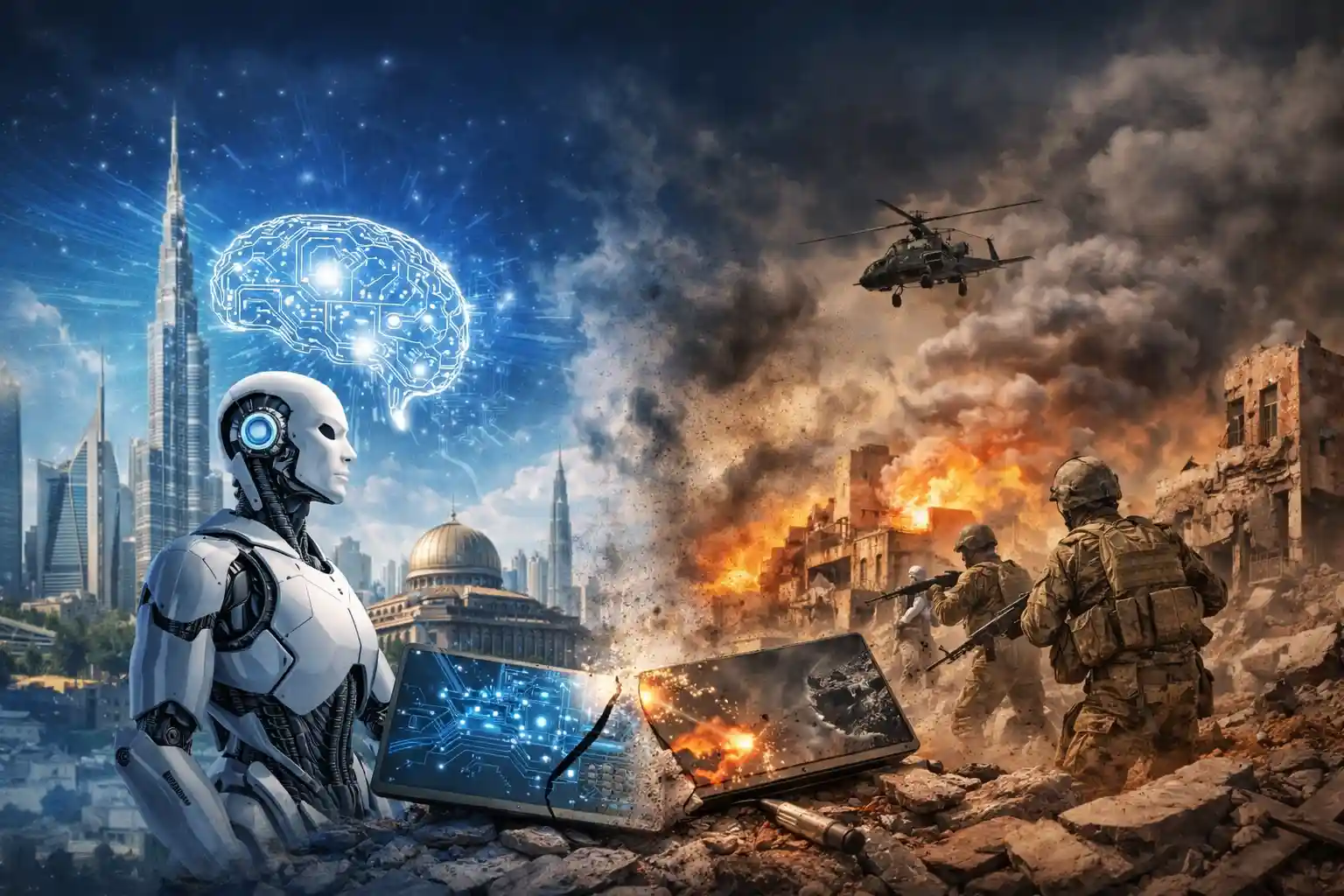
The ongoing Iran war is no longer confined to physical battlefields. A parallel conflict is unfolding online, where artificial intelligence-generated content, deepfakes and misinformation are rapidly shaping global perceptions of the war.
Social Media Turns Into a Digital Battlefield
Since the conflict began, social media platforms have been flooded with fabricated videos, recycled footage and misleading claims. Experts say this surge in AI-generated content is transforming how wars are consumed and understood by the public.
Researchers note that false and manipulated visuals are spreading faster than verified information, often reaching millions before fact-checking can catch up.
This has turned platforms like X (formerly Twitter), Instagram and TikTok into arenas where competing narratives battle for influence, with both state and non-state actors attempting to shape public opinion.
Rise of AI-Generated War Content
Advances in generative AI have made it easier and cheaper than ever to create highly realistic images and videos. From fake missile strikes to fabricated battlefield footage, synthetic media is now a core tool in modern information warfare.
Examples circulating online include:
- Deepfake videos showing false attacks on military assets
- Manipulated clips of soldiers and civilians in distress
- AI-generated imagery exaggerating battlefield outcomes
In many cases, even experienced users struggle to distinguish real footage from fabricated content, highlighting the growing sophistication of AI tools.
Propaganda and Narrative Control
Analysts say all sides in the conflict are leveraging digital platforms to influence “hearts and minds.” AI-generated content is being used not only to misinform but also to amplify political messaging and propaganda.
Some campaigns blend entertainment-style content memes, cinematic edits and dramatized visuals with real events, blurring the line between fact and fiction. This strategy is designed to increase engagement while subtly reinforcing ideological narratives.
Viral Rumours and Deepfake Confusion
The speed and scale of misinformation have led to widespread confusion. Viral rumours, including false reports about political leaders’ deaths or fabricated military events, have repeatedly gained traction online.
In some cases, even authentic footage has been questioned as fake, while actual deepfakes have been mistaken for reality further eroding trust in digital content.
Bots and Coordinated Campaigns
Experts warn that some misinformation is not organic but part of coordinated campaigns. Anonymous accounts and automated bots are amplifying specific narratives, making them appear more credible and widely supported than they actually are.
AI-driven systems can now:
- Generate large volumes of content quickly
- Target specific audiences based on behavior
- Amplify posts through coordinated engagement
This creates an “information overload” environment where users struggle to verify authenticity.
Speed vs. Verification
One of the biggest challenges is the gap between how fast misinformation spreads and how slowly verified information emerges.
“In a fast-moving conflict, verified information is often delayed,” researchers note, allowing false narratives to fill the vacuum almost instantly.
As a result, emotional and dramatic content whether true or false tends to dominate public attention.
Erosion of Trust in Information
The widespread use of AI-generated content is contributing to a broader crisis: declining trust in what people see online.
Experts warn that:
- False information can spread significantly faster than factual reporting
- Corrections rarely reach the same audience as the original misinformation
- Even clearly fake content can feel “emotionally true” to viewers
This environment makes it increasingly difficult for the public to separate reality from manipulation.
A New Era of Information Warfare
The Iran war highlights a critical shift in modern conflict where control over information is nearly as important as control over territory.
As AI tools continue to evolve, the challenge for governments, platforms and users will be to:
- Detect and label AI-generated content effectively
- Strengthen verification systems
- Improve public awareness and media literacy
Without these safeguards, experts warn that future conflicts could be defined as much by digital deception as by events on the ground.
References
- How misinformation and AI deepfakes on social media are reshaping the Iran war