
German Startup Develops AI-Powered Cyborg Cockroaches for Reconnaissance Missions
German startup SWARM Biotactics has developed AI-enabled “cyborg” cockroaches equipped with sensors and neural interfaces to gather intelligence in confined, GPS-denied environments. The biohybrid systems are being field-tested for military reconnaissance, highlighting a new frontier in AI-driven defence technology.
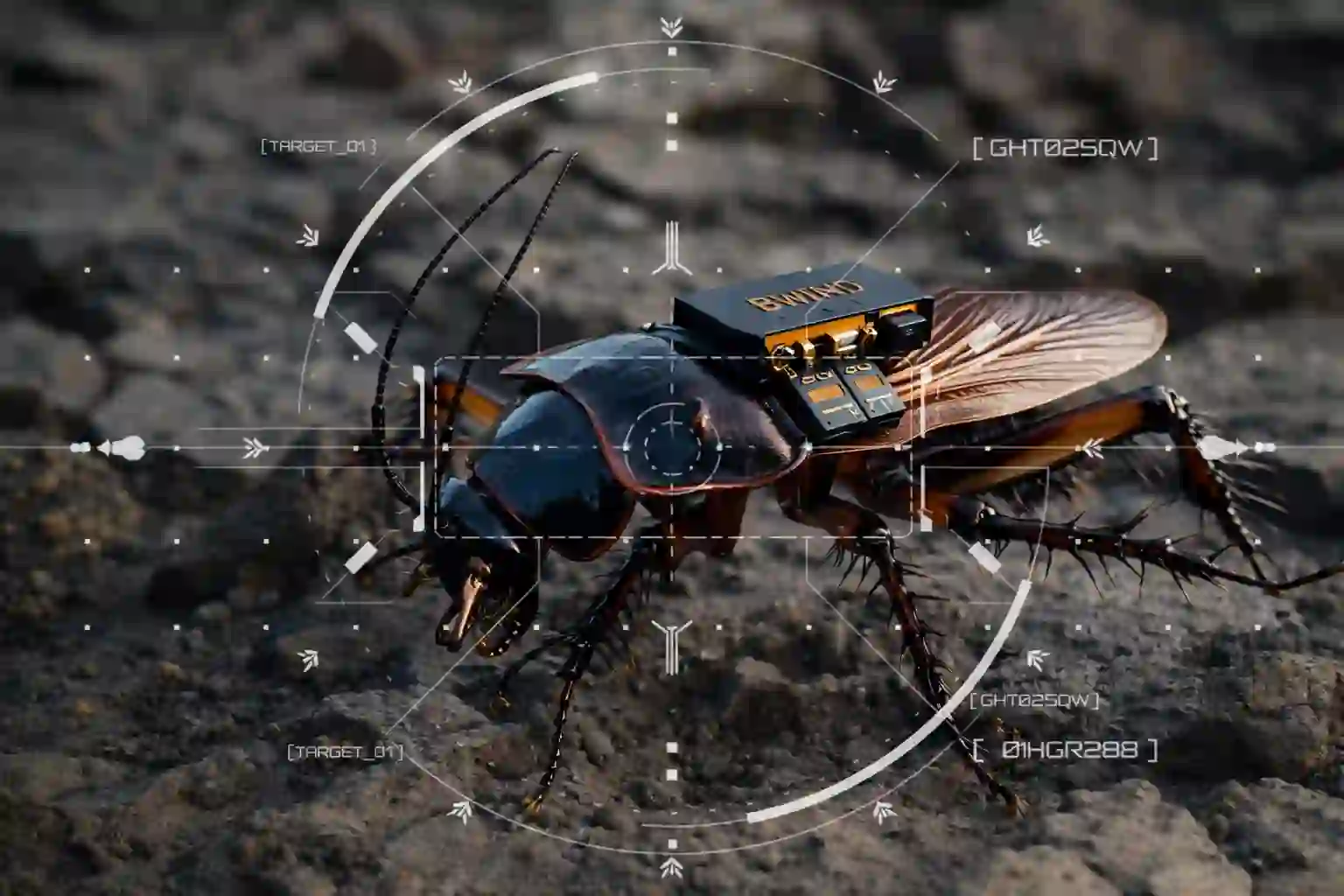
SWARM Biotactics Develops Bioelectronic “Cyborg” Cockroaches for Military Reconnaissance
In a striking example of how artificial intelligence and robotics are reshaping modern warfare, German defence startup SWARM Biotactics has developed bioelectronic “cyborg” cockroaches designed to gather intelligence in environments that are inaccessible to soldiers or traditional drones. The innovation represents a new frontier in reconnaissance technology and could redefine how militaries and security forces conduct surveillance in high-risk and GPS-denied areas.
Bio-Robot Insects for Mission-Critical Intelligence
The Kassel-based startup has engineered living insects equipped with AI hardware and sensor backpacks that carry modular payloads including:
- Cameras
- Microphones
- Radios
- Edge computing elements
enabling them to crawl through rubble, tunnels, and other confined or complex environments while relaying real-time intelligence. The insects’ biological mobility, combined with AI-assisted control systems, allows them to access spaces where traditional unmanned aerial vehicles or ground robots typically struggle.
SWARM Biotactics describes the technology as “living, intelligent systems” capable of operating as coordinated swarms. According to CEO Stefan Wilhelm, the company’s vision is a departure from conventional robotics: rather than scaling through manufacturing, these systems scale through biology via breeding, allowing tactical “physical intelligence” at unprecedented density and stealth.
Stealth, Access and Autonomous Operations
The startup’s cyborg insects are fitted with bioelectronic neural interfaces that allow precise control of movement and sensor operation. Equipped with secure communication protocols, these bio-robotic units are intended to collect situational awareness data especially in “GPS-denied” or high-risk zones such as collapsed infrastructure or urban battlegrounds where conventional reconnaissance tools fail.
This capability has drawn interest from military allies. NATO forces, including German military units, are reportedly field-testing these insect platforms in real reconnaissance scenarios, as part of broader efforts to explore adaptive intelligence systems for future defence operations.
Wilhelm has described this era of defence technology as defined by access, autonomy and resilience, where gaining actionable information with minimal risk and footprint is pivotal. Moderate success in testing stages suggests biohybrid systems might offer a complementary solution to traditional surveillance technologies.
Rapid Development from Lab to Field
SWARM Biotactics’ progress has been swift. Within about a year of its founding, the company has grown its team to over 40 engineers and scientists across Germany and the United States, developing core technologies including:
- Neural interfaces
- Swarm autonomy software
- Modular sensor payloads
- Mission control tools
Wilhelm notes that this holistic “full-stack” approach has enabled the startup to move rapidly from research to operational experimentation.
The insect swarm concept merges cutting-edge AI with a biological host, creating a hybrid platform that could in theory operate with stealth and low signature, making detection harder and providing tactical advantages in reconnaissance tasks.
Ethical and Strategic Considerations
The development of bio-robotic reconnaissance insects raises complex ethical questions about the use of living organisms in military contexts, autonomy in systems blending biology and AI, and the potential long-term implications of deploying augmented lifeforms for operational tasks. While proponents stress the capability and tactical value, critics warn of blurred lines between biological life and machine systems in warfare.
Although the technology is still in the early testing and evaluation phase, its progression reflects a broader shift in military innovation from raw firepower towards adaptive intelligence, enhanced access, and covert reconnaissance capabilities. Some analysts suggest these insects may soon be part of integrated swarm reconnaissance portfolios that include conventional drones and robotic systems.
Broader Trends in Biohybrid Robotics
SWARM Biotactics’ cyborg cockroach initiative is part of an emerging trend in biohybrid robotics, where biological organisms are augmented with AI and mechanical systems to perform specialised tasks. While much of this work is experimental, it draws on decades of research into insect scale locomotion and neural control systems. Some academic research has explored similar concepts, such as automatic assembly systems for insect-computer hybrid robots highlighting the feasibility of hybridisation at scale.
As defence agencies continue to invest in reconnaissance and surveillance technologies, the line between biology and robotics is increasingly blurred, prompting debates about the future role of AI in warfare and the ethical frameworks needed to govern such innovations.
This article is based on verified reports about SWARM Biotactics’ bioelectronic insect reconnaissance system and its implications for modern defence technology.