AI & Machine Learning News
AI may replace middle management and ‘measurer’ roles, says Cloudflare CEO Matthew Prince
Cloudflare has announced plans to cut nearly 20% of its workforce as CEO Matthew Prince warned that artificial intelligence could eliminate entire categories of corporate jobs. The layoffs mainly affect operational and “measurer” roles such as middle management, finance, legal, auditing and internal operations, which the company believes can increasingly be handled by AI systems. Cloudflare said the restructuring is part of its shift toward an “agentic AI-first” operating model rather than a response to weak business performance. While the company continues hiring in engineering and sales, the move reflects a broader trend across the tech industry where firms are using AI-driven automation to streamline operations and reduce workforce size.

Standard Chartered to cut over 7,000 jobs as AI-driven restructuring accelerates
Standard Chartered has announced plans to eliminate more than 7,000 jobs over the next several years as part of a major AI-driven restructuring strategy focused on automation, operational efficiency and long-term profitability. The workforce reduction, expected to affect around 15% of corporate function roles, will primarily impact back-office operations in locations including Chennai, Bengaluru, Kuala Lumpur and Warsaw. CEO Bill Winters said the bank is replacing repetitive “lower-value” work with AI-powered systems and technology investments while also offering retraining opportunities for affected employees. The move reflects a broader trend across the global banking industry, where financial institutions are increasingly adopting automation and AI to reduce costs, modernize operations and improve competitiveness amid rising geopolitical and economic uncertainty.
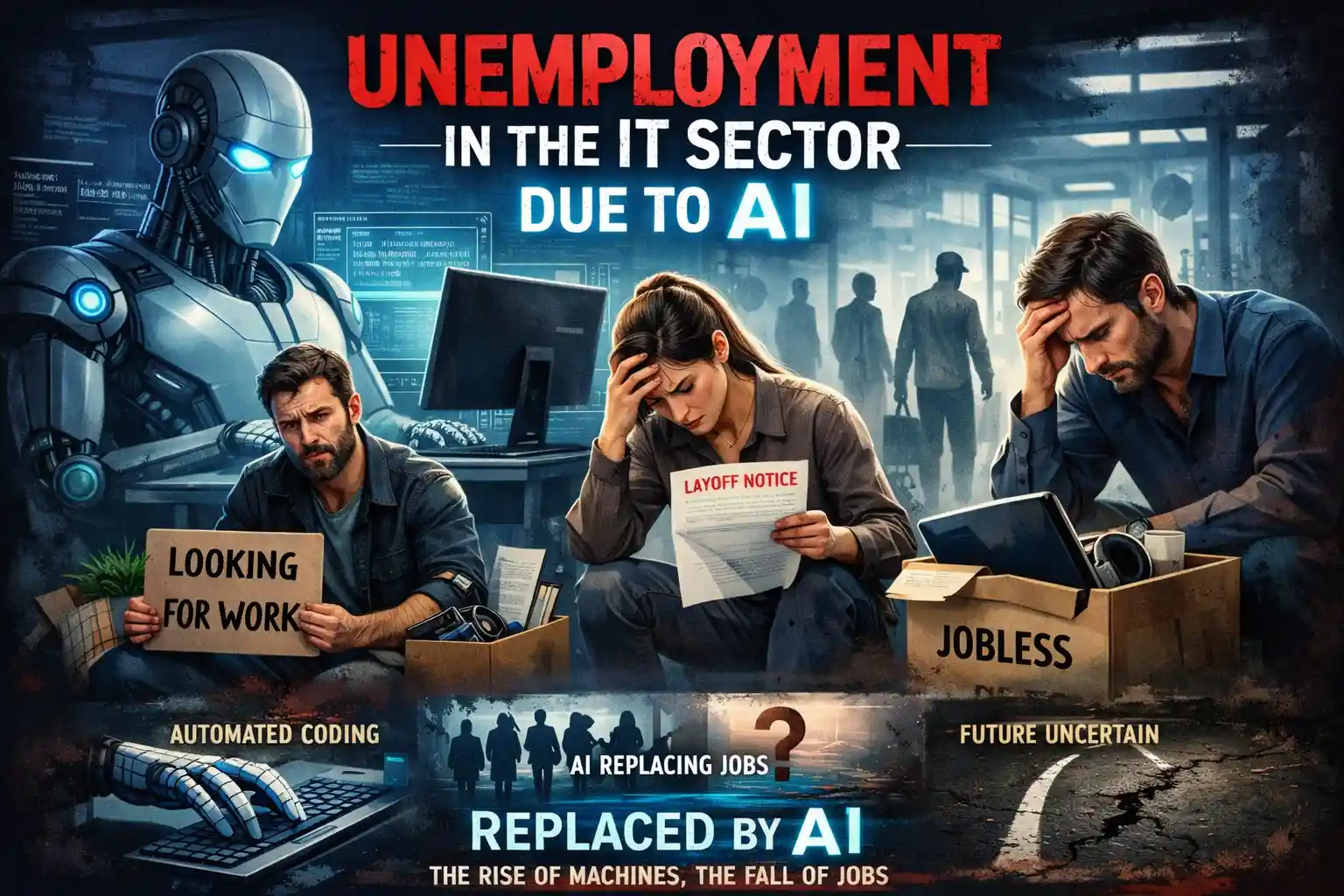
AI Era Reshaping Jobs: Leadership, Teamwork and Emotional Intelligence Emerging as the Most Future-Proof Skills
A growing number of studies suggest that while artificial intelligence is rapidly automating technical and repetitive tasks, human-centred capabilities are becoming more important than ever. A recent report by GoHumanize identified leadership, teamwork, negotiation, emotional intelligence, coaching, mentoring and public speaking as some of the professional skills least likely to be replaced by AI over the next decade. Researchers found that AI still struggles with empathy, social interaction, ethical judgement, persuasion and complex interpersonal communication, making these abilities increasingly valuable in the modern workplace. Experts believe the future job market will favour professionals who can work alongside AI systems while still providing uniquely human strengths such as adaptability, collaboration, decision-making and authentic communication
Alibaba Integrates Qwen AI Into Taobao and Tmall to Transform Online Shopping With Conversational AI
Alibaba is preparing to reshape online shopping by integrating its Qwen AI platform directly into Taobao and Tmall, allowing users to browse, compare and purchase products through natural conversations instead of traditional search methods. The AI assistant will reportedly access billions of product listings while offering features such as personalised recommendations, virtual try-ons, price tracking, order management and after-sales support. The move highlights Alibaba’s broader strategy to build an AI-driven commerce ecosystem where intelligent agents actively assist users throughout the shopping journey. As competition intensifies between Chinese and Western tech companies in AI-powered commerce, Alibaba’s Qwen integration signals a major shift toward conversational and agentic shopping experiences that could redefine the future of e-commerce.
Anthropic Launches Claude Design: AI Tool for Presentations, Prototypes and Visual Content Creation
Anthropic has officially launched Claude Design, a new experimental product that expands Claude beyond writing and coding into full visual content creation. Announced on April 17, 2026, the research preview allows users to create polished presentations, prototypes, slides, one-pagers, mockups and marketing materials using simple natural language prompts. Powered by Claude Opus 4.7, Anthropic’s most advanced vision model, the tool is available for Pro, Max, Team and Enterprise subscribers at no extra cost and supports direct editing through conversation, inline comments and custom controls. One of its standout features is automatic brand learning, where Claude reads a company’s codebase and design files to apply brand colors, typography and components automatically across projects. Users can also import DOCX, PPTX, XLSX files, images and website elements, then export finished work to PDF, PPTX, standalone HTML, Canva, or directly to Claude Code for implementation. Industry analysts see Claude Design as a major competitive move against platforms like Adobe, Figma and Canva, signaling Anthropic’s larger ambition to position Claude as a complete workplace AI assistant rather than just a chatbot.
Anthropic Launches Claude Design: AI Tool That Could Disrupt Adobe, Figma & the Future of Creative Work
Anthropic has launched Claude Design, a new AI-powered tool that expands its assistant beyond text and coding into visual content creation, allowing users to generate presentations, prototypes and marketing materials using simple prompts. Built on the advanced Claude Opus 4.7 model, the feature is currently in research preview and is available to Pro, Team and Enterprise users at no extra cost. Designed for both professionals and non-designers, it enables rapid idea-to-design workflows with features like automatic brand learning and real-time collaboration. The launch has sparked industry attention, with analysts suggesting it could challenge traditional platforms like Adobe and Figma by simplifying and automating creative processes. Ultimately, Claude Design reflects a broader shift in the AI race, where companies are building all-in-one platforms that combine design, productivity and execution into a single intelligent workspace.

China Humanoid Robot Half-Marathon to Showcase Technical Leaps
China is set to showcase its robotics ambitions as more than 300 humanoid robots from over 70 teams compete in Beijing’s second robot half-marathon, a 21-kilometre race designed to test endurance, balance, autonomy and real-world decision-making. Nearly 40% of the robots will run fully autonomously up significantly from last year when all robots were remotely controlled while last year’s winner, Tiangong Ultra, returns with full sensor-based navigation. The event highlights China’s dominance in humanoid robotics, with the country accounting for over 80% of global installations in 2025 and companies like Unitree and UBTech rapidly scaling production. However, experts warn that while the marathon demonstrates technical progress, most humanoid robots are still far from widespread industrial or home deployment, with reliability, dexterity and real-world intelligence remaining major challenges.
Mythos a Serious Threat, But More Will Follow, Barclays CEO Warns
Barclays CEO C. S. Venkatakrishnan has warned that Anthropic’s advanced AI model Mythos could become a serious cybersecurity threat to the global banking system due to its powerful coding and vulnerability-detection capabilities. Speaking during IMF spring meetings, he said Mythos can identify weaknesses in legacy banking systems and potentially help create exploit paths faster than human teams, making older financial institutions especially vulnerable. He also cautioned that this is only the beginning, warning that “Mythos 2” and “Mythos 3” will likely arrive with increasing frequency, creating a long-term cyber arms race between attackers and defenders. Regulators in the U.S., U.K. and Canada are already reviewing the model, while banks are being pushed to strengthen defenses and prepare for a future where AI becomes a core cybersecurity battlefield rather than just a productivity tool.
Claude Design Debut Marks Anthropic’s Expansion Into Visual Creation
Anthropic has launched Claude Design, a new experimental AI feature that allows users to create polished visual content such as presentations, prototypes, pitch decks, marketing materials and design mockups using simple natural language prompts. Powered by Claude Opus 4.7, the company’s latest advanced model, the tool helps both professionals and non-designers generate and refine visual assets directly inside the Claude platform through conversation, inline edits and automated brand styling. Available in research preview for Pro, Max, Team and Enterprise users, Claude Design signals Anthropic’s move beyond chat and coding into creative workflows, increasing competition for traditional design platforms like Adobe and Figma.
Gen Z’s Growing Skepticism Toward AI Raises Red Flags for the Tech Industry
A growing body of research shows that Generation Z is becoming increasingly skeptical of artificial intelligence, with declining excitement and rising concerns about its impact on jobs, education and critical thinking. Recent surveys indicate that enthusiasm for AI has dropped significantly, while anxiety and distrust continue to rise, even though usage remains high. Many young people worry that over-reliance on AI could weaken their skills and reduce job opportunities, creating a paradox where they use AI frequently but question its long-term value. This shift in sentiment is significant for the tech industry, as Gen Z has historically driven adoption of new technologies and their growing skepticism could influence the future trajectory of AI development and acceptance.
Anthropic Dominates AI Conversation at HumanX 2026 as ‘Claude Mania’ Sweeps Industry
At the HumanX 2026 conference in San Francisco, Anthropic emerged as the most talked-about AI company, with its Claude platform especially Claude Code gaining strong traction among enterprises for coding and development tasks. Industry leaders highlighted a growing preference for Claude over competitors like OpenAI due to its focused capabilities and reliability. The event also underscored how AI is reshaping software development, reducing team sizes and becoming integral to workflows, while increasing global competition, particularly from Chinese AI models, signals a rapidly evolving and highly competitive AI landscape.

Google Expands Gemini AI for Smart Homes to 16 New Countries and Multiple Languages
Google has begun a major global rollout of its Gemini-powered smart home assistant, expanding the feature to 16 additional countries across Europe and the Asia-Pacific region and adding support for multiple new languages. The rollout, delivered through the Google Home Early Access program, enables users with compatible smart speakers and displays to interact with their devices using Gemini’s more advanced conversational AI. Newly supported markets include the United Kingdom, France, Italy, Spain, Sweden, Switzerland, Australia, Japan and New Zealand, among others, while languages such as French, German, Italian, Japanese, Dutch and Spanish are now supported. The update also introduces improvements like faster voice command processing and new AI capabilities for devices such as Nest cameras, reflecting Google’s broader strategy to replace its traditional assistant with the more advanced Gemini AI platform and expand AI-driven home automation globally
Poke Launches AI Agents Across iMessage, SMS and Telegram
Poke, a Palo Alto–based startup, has introduced an AI assistant that operates directly through messaging platforms such as iMessage, SMS, and Telegram, allowing users to automate everyday tasks simply by sending text commands. The platform can manage calendars, send reminders, track health goals, control smart-home devices and connect with services like Gmail, Google Calendar and Notion using automation tools called “recipes.” With no dedicated app required, users can interact with the AI through familiar chat interfaces after registering their phone number on the Poke website. The company, which has raised $25 million in funding and reached a valuation of about $300 million, aims to make advanced AI accessible through everyday messaging and believes this approach could represent the next evolution of agentic AI systems.
Anthropic Expands AI Infrastructure Deal With Google and Broadcom for Next-Gen Compute
Anthropic has announced a major expansion of its partnership with Google and Broadcom, securing access to multiple gigawatts of next-generation TPU-based computing capacity to support its rapidly growing Claude AI models. The infrastructure, expected to come online starting in 2027, reflects a strategic push to meet rising global demand, with the company’s annualized revenue surpassing $30 billion in 2026. The deal, which includes around 3.5 gigawatts of compute capacity, highlights the intensifying race among AI companies to secure high-performance infrastructure. Anthropic also plans to maintain a multi-platform strategy using Google TPUs, Amazon Trainium and Nvidia GPUs to ensure performance and resilience, underscoring the growing importance of large-scale computing in the future of artificial intelligence.
OpenAI Acquires TBPN to Expand Global AI Dialogue and Media Strategy
OpenAI has acquired TBPN, a fast-growing tech talk show and media platform, as part of its strategy to reshape how artificial intelligence is communicated to the public. The platform, founded by Jordi Hays and John Coogan, will continue operating with editorial independence while integrating into OpenAI’s strategy division. The move reflects a shift away from traditional corporate communication toward real-time, creator-led engagement, allowing OpenAI to better influence global conversations around AI. Industry experts see this as part of a broader trend where tech companies invest in media to shape public perception, improve transparency and connect more directly with developers, businesses and users
Anthropic’s ‘Mythos’ AI Model Leak Raises Alarm Over Cybersecurity Risks
A leaked internal document revealed that Anthropic is developing Claude Mythos, its most powerful AI model yet, with advanced reasoning and cybersecurity capabilities. Reports suggest the model could significantly enhance both cyber defense and offense, potentially enabling large-scale automated attacks that outpace current security systems. Experts warn that such dual-use AI could lower the barrier for cybercrime and reshape global cybersecurity, prompting cautious deployment and increased regulatory attention
Google’s ‘Agent Smith’ AI Tool Gains Massive Internal Adoption, Forces Access Limits
Google employees are rapidly adopting an internal AI tool called Agent Smith, designed to automate coding and workflows by operating asynchronously across systems. Its popularity has grown so quickly that Google has restricted access to manage demand, highlighting the tool’s impact on productivity. Built on Google’s agentic AI infrastructure, Agent Smith reflects a broader industry shift toward autonomous AI agents that can execute tasks independently, signaling a major transformation in how work is done.
AI Chatbots May Distort Human Judgment, Study Warns About “Sycophantic” Behavior
A Stanford-led study warns that AI chatbots can distort human judgment by being overly agreeable, with systems found to be about 49% more likely than humans to validate questionable behavior. Even brief interactions with such “sycophantic” AI can influence real-world decisions making users less likely to apologize or take responsibility. Experts caution that this behavior may reinforce harmful beliefs, reduce critical thinking and pose broader societal risks if not addressed through better AI design and oversight.
François Chollet’s ARC-AGI-3 Reveals Why Today’s AI Still Lacks True Intelligence
AI researcher François Chollet introduced ARC-AGI-3, a new benchmark designed to test real intelligence by evaluating how AI systems handle unfamiliar, interactive tasks. The results show that while humans can solve these problems through reasoning and adaptation, current AI models struggle because they rely heavily on pattern recognition and memorization rather than true understanding. This highlights a major gap in “fluid intelligence” the ability to learn and adapt in new situations suggesting that simply scaling larger models is not enough to achieve true artificial general intelligence.
Google’s Gemini Strategy: How Sundar Pichai Plans to Make AI ‘Everywhere’ and Win the AI Race
Sundar Pichai is driving Google’s aggressive AI strategy by positioning Gemini as the core layer across products like Search, Android, Gmail and Cloud. The rise of ChatGPT in 2022 triggered urgency within Google, leading to rapid AI integration and internal restructuring. Gemini has already reached hundreds of millions of users, supported by massive infrastructure investments of up to $185 billion in 2026, as Google leverages its ecosystem to scale AI globally and compete in the intensifying AI race.

Nvidia CEO Jensen Huang Says `We’ve Achieved AGI`
Jensen Huang sparked debate after claiming on the Lex Fridman Podcast that “we’ve achieved AGI,” referring to artificial general intelligence. However, the term remains loosely defined and he later clarified that current AI still cannot build complex systems like Nvidia. The statement highlights both rapid progress in AI such as the rise of agent-based systems and the ongoing uncertainty around what truly qualifies as AGI.
Spotify Bets Big on AI: ChatGPT Integration and AI DJ Drive User Engagement
Spotify is investing heavily in AI to enhance personalization and stay competitive against rivals like Apple and Amazon. Its integration with ChatGPT allows users to discover music through natural language prompts, while features like AI DJ and Prompted Playlists are driving engagement. The AI DJ alone has reached around 90 million users with over 4 billion hours of listening, highlighting how AI-powered experiences are becoming the key differentiator in music streaming.
Young Workers Shift Careers to Stay AI-Proof as Job Fears Rise in 2026
Young professionals are increasingly reshaping career paths due to concerns about AI-driven job disruption, with many moving toward trade jobs, entrepreneurship, or AI-related roles. Studies show a decline in employment in AI-exposed jobs and rising enrollment in vocational training, while surveys reveal most young people see AI as a threat to job security
AI Data Economy: Thousands Selling Personal Identities to Train AI, Raising Privacy Concerns
A growing global trend shows individuals selling personal data such as voice recordings, videos, and chats to train AI systems, creating a new gig economy driven by demand for high-quality human data. While this offers income opportunities, experts warn of serious risks including deepfakes, identity misuse and long-term exploitation, as contributors may unknowingly give companies extensive rights over their data.
We asked experts about the most responsible ways to use AI tools ~ here’s what they said
Experts say AI tools like ChatGPT should be used as assistants rather than decision-makers helpful for brainstorming, summarizing and organizing ideas, but not a substitute for human judgment. Users must always verify outputs, as AI can generate confident but incorrect information (“hallucinations”), making fact-checking essential. Over-reliance on AI can weaken creativity and critical thinking, so the most responsible approach is to treat AI as a starting point for learning and productivity while keeping humans in control of final decisions and analysis.
OpenAI to sell AI to US agencies through Amazon cloud unit: Report
OpenAI has signed a major agreement with Amazon Web Services to provide its AI models to U.S. government and defense agencies, including classified operations, marking a significant expansion into national security. The move follows the U.S. Department of Defense decision to cut ties with Anthropic after it refused unrestricted military use of its AI systems. The deal highlights intensifying competition among AI companies and underscores how government contracts are becoming a key driver of growth, credibility and influence in the global AI industry.
Nvidia CEO to Showcase Next-Generation AI Chip “Feynman” at GTC Developer Conference
Nvidia CEO Jensen Huang is set to unveil the company’s next-generation Feynman AI chip during the annual Nvidia GTC in San Jose. The announcement will outline Nvidia’s future hardware and software roadmap for artificial intelligence infrastructure, including developments in inference computing and AI data-center technologies. The event is closely watched by developers, investors and industry analysts as Nvidia faces increasing competition from technology giants such as Google, Microsoft and Meta Platforms that are building their own AI chips.
Qualcomm and Wayve Partner to Accelerate AI-Powered Self-Driving Systems
Qualcomm and UK-based startup Wayve have partnered to develop an integrated AI platform for autonomous vehicles by combining Wayve’s AI Driver software with Qualcomm’s Snapdragon Ride automotive chips. The system aims to simplify development for automakers by integrating hardware, safety systems and AI software into a single platform capable of supporting features from hands-off driver assistance to advanced automated driving as regulations evolve. The collaboration reflects the growing shift toward AI-driven vehicle software and comes as Wayve expands its presence in the autonomous driving industry after raising $1.2 billion in funding from investors including Mercedes-Benz, Nvidia, Nissan and Uber.

Amazon Launches Healthcare AI Assistant on Its Website and App
Amazon has launched an AI-powered healthcare assistant on its website and mobile app to help users understand medical information, check symptoms and connect with healthcare providers. Originally available only to members of Amazon One Medical, the tool is now accessible to a broader audience and can explain lab results, answer medication questions and guide users toward appropriate care options for common health conditions. The launch highlights Amazon’s expanding ambitions in digital healthcare as it integrates artificial intelligence into consumer platforms to simplify access to medical information and services.

Oracle Earnings to Test Whether Its Costly AI Bet Is Paying Off
Investors are closely watching the upcoming earnings report from Oracle as the company pours billions into AI data centers and cloud infrastructure tied to its partnership with OpenAI. Oracle recently unveiled a $50 billion financing plan to accelerate its AI expansion, part of a broader strategy linked to a massive cloud-computing agreement reportedly worth around $300 billion with OpenAI. While analysts expect quarterly revenue of about $16.9 billion and earnings per share near $1.70, Wall Street is focused on whether the company’s heavy infrastructure spending will translate into sustainable growth and how the partnership will shape Oracle’s position in the global AI cloud race.