Young Workers Shift Careers to Stay AI-Proof as Job Fears Rise in 2026
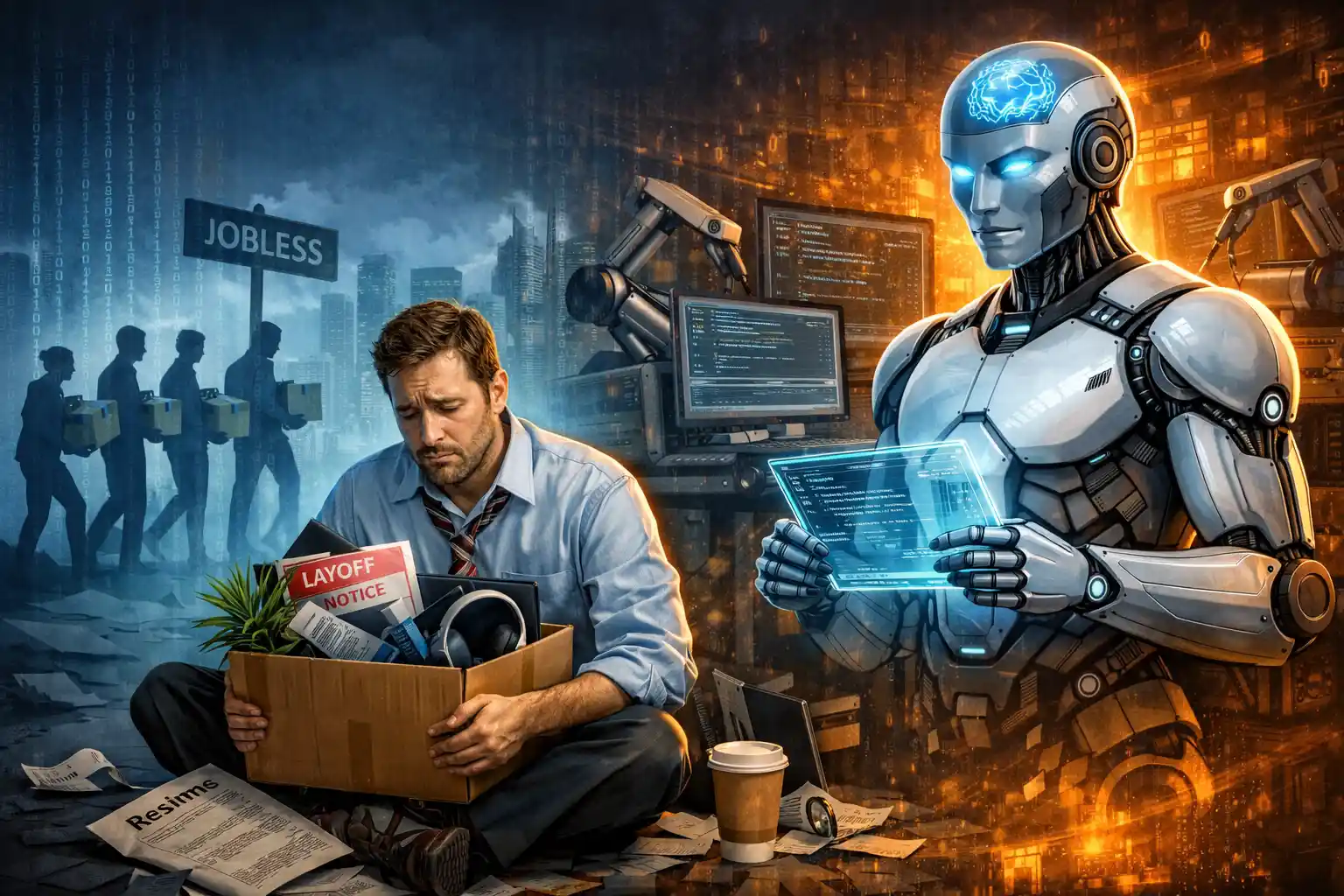
Young professionals are increasingly reshaping career paths due to concerns about AI-driven job disruption, with many moving toward trade jobs, entrepreneurship, or AI-related roles. Studies show a decline in employment in AI-exposed jobs and rising enrollment in vocational training, while surveys reveal most young people see AI as a threat to job security
Key Highlights
- Young professionals are increasingly making career decisions based on AI’s potential impact on jobs.
- Many are shifting from white-collar roles to blue-collar jobs or entrepreneurship to reduce automation risk.
- A Harvard survey found 59% of people aged 18–29 see AI as a threat to job prospects.
- Employment in AI-exposed roles declined by 16% among young workers between 2022 and 2025, according to Stanford research.
- Vocational education enrollment has risen significantly, reflecting growing interest in trade careers.
- Some young professionals are embracing AI, launching startups or building careers in the field.
As artificial intelligence continues to evolve, young workers are rethinking traditional career paths and actively preparing for an uncertain job market. With concerns about automation replacing roles especially in white-collar sectors many are either pivoting to AI-resistant professions or leveraging the technology to create new opportunities.
Shift Toward AI-Resistant Careers
A growing number of young professionals are moving away from jobs they believe are vulnerable to automation.
For example, a 28-year-old insurance worker chose to leave his data-entry-focused role to pursue firefighting, citing concerns that AI could eventually replace office-based tasks. The move reflects a broader trend where workers are prioritizing careers that rely on human empathy and physical presence traits seen as harder for AI to replicate.
Others are turning to skilled trades such as electrical work, where demand remains strong and automation risks are comparatively lower.
Education and Career Choices Are Evolving
Students and early-career professionals are increasingly factoring AI into their education decisions.
A Harvard survey found that a majority of young adults view AI as a threat to their future employment, while many also believe it could reduce the meaning of work.
In response, some students are abandoning traditional academic paths. One example includes a computer science student who switched to trade school after becoming concerned about AI’s rapid advancement and its impact on employability.
At the same time, enrollment in vocational programs has grown significantly, indicating a shift toward practical, hands-on careers.
Parents and Institutions Also Feeling the Pressure
Concerns about AI are not limited to young workers. Parents and educators are increasingly involved in guiding career decisions.
Some families are actively researching professions that are less likely to be automated, such as healthcare and diplomacy. Career counselors report frequent discussions with students about how AI could influence long-term job prospects.
Research also suggests that jobs requiring physical presence such as agriculture and construction are less exposed to AI disruption compared to roles like programming or customer service.
Entrepreneurship and AI Adoption on the Rise
While many are trying to avoid AI disruption, others are embracing it.
Some young professionals are launching AI-focused startups or shifting their careers toward emerging tech opportunities. One entrepreneur left university to build an AI-powered education platform and has already secured significant funding.
Others are using AI tools to grow their own businesses, applying them in areas like content creation, software development, and operations.
Mixed Sentiment Toward AI Among Youth
Despite growing adoption, skepticism remains high.
Surveys show that a majority of young people hold negative views about AI, with concerns that continued development could lead to job losses.
Still, many are hedging their bets combining creative or technical fields with additional skills to remain adaptable in a rapidly changing job market.
Conclusion
The rise of artificial intelligence is reshaping how young workers approach careers, education, and long-term planning. Whether by shifting to AI-resistant roles, pursuing trades, or embracing emerging technologies, this generation is actively adapting to a future where the role of AI in the workplace remains uncertain.