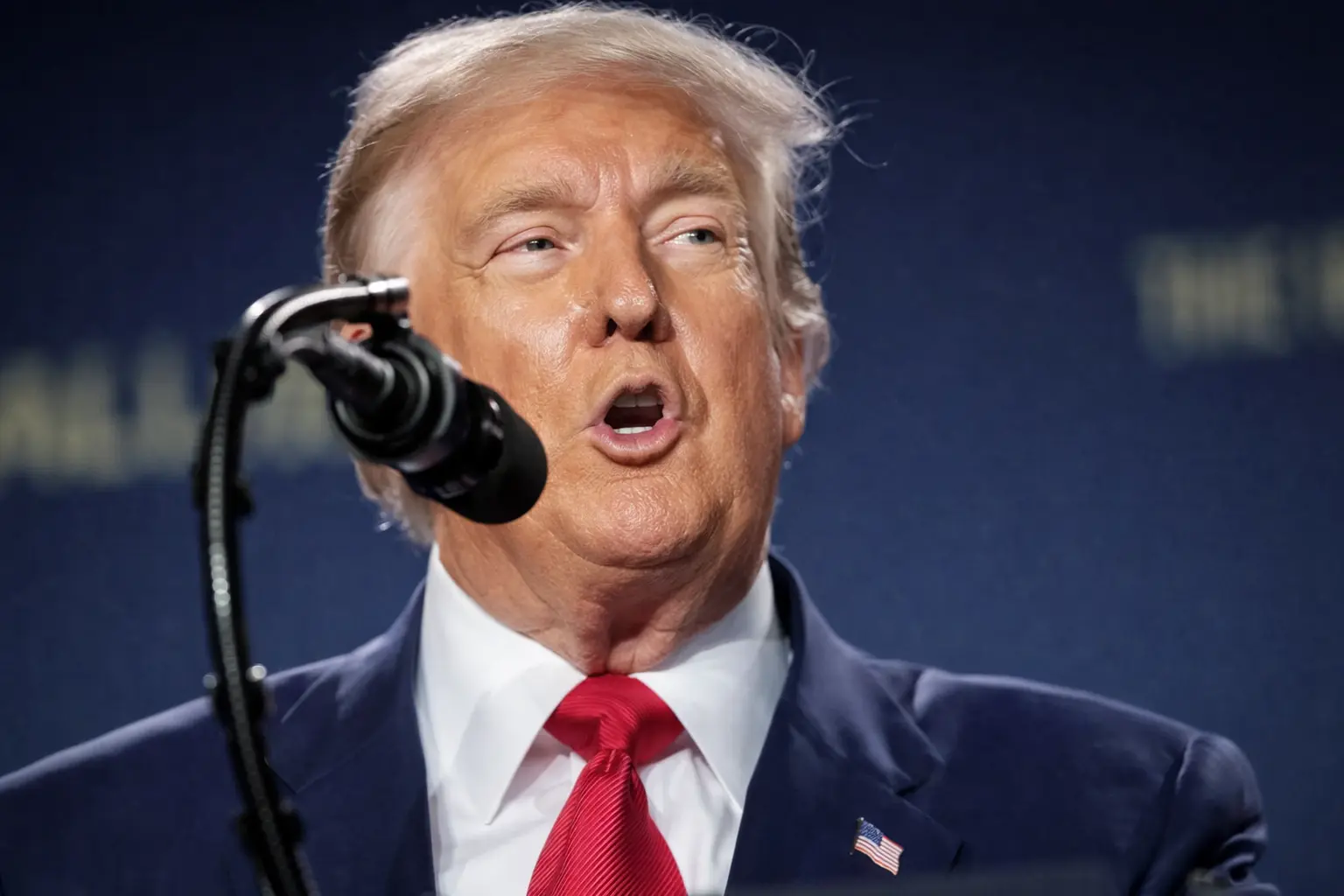
Donald Trump Unveils National AI Policy to Unify Regulations and Limit State Control
The White House has introduced a national AI policy framework aimed at creating a unified federal standard while limiting state-level regulations. The proposal focuses on areas like child safety, energy use, intellectual property and free speech, while promoting innovation and U.S. competitiveness against rivals like China. However, the plan faces political hurdles in Congress and resistance from states concerned about federal overreach
Key Highlights
- The administration of Donald Trump has unveiled a national AI policy framework to standardize rules across the United States.
- The proposal aims to limit state-level AI regulations and replace them with a single federal approach.
- The framework includes measures on child safety, energy use, intellectual property and free speech protections.
- The White House wants Congress to turn the plan into law within the coming months.
- The proposal may face challenges in Congress and opposition from states concerned about federal overreach.
Trump administration unveils national AI policy to unify regulations and curb state powers
The Trump administration has introduced a new legislative framework aimed at creating a single national policy for artificial intelligence (AI), marking a significant step in the U.S. government’s approach to regulating the rapidly evolving technology.
The proposal seeks to establish uniform safety and security standards across the country while preventing individual states from introducing their own separate AI regulations. Officials argue that a fragmented system of state laws could slow innovation and weaken America’s global competitiveness, particularly against rivals like China.
Focus on innovation, safety and national competitiveness
The framework outlines a broad set of priorities, including protecting children online, managing the rising energy demands of AI data centers and addressing intellectual property concerns.
It also calls for safeguards to ensure that AI systems are not used to restrict lawful political speech or censor dissent, reflecting ongoing concerns about bias and content moderation in AI systems.
In addition, the plan emphasizes the need to support infrastructure growth, including simplifying approvals for AI-related facilities and ensuring that increased energy consumption does not significantly impact consumers.
Push for federal control over state-level AI laws
A central goal of the proposal is to preempt state-level AI regulations, replacing what the administration describes as a “patchwork” of rules with a unified federal standard.
While some flexibility may remain for states in areas like consumer protection, the broader intent is to shift primary regulatory authority to the federal government. This approach builds on earlier executive actions aimed at reducing what officials consider burdensome local restrictions on AI development.
Legislative path faces political hurdles
The White House has said it plans to work with Congress in the coming months to turn the framework into legislation that can be signed into law this year.
However, passing such a bill may prove difficult. Lawmakers remain divided on how strictly AI should be regulated and some states have already implemented their own AI laws, which could conflict with the proposed national framework.
Industry support and broader implications
Many technology companies and AI industry leaders have supported the idea of a single national standard, arguing that consistent regulations will make it easier to innovate and scale AI technologies.
At the same time, critics warn that limiting state authority could reduce oversight and accountability, especially as concerns grow around AI’s impact on jobs, privacy and misinformation.
Bigger picture: shaping the future of AI governance
The proposed framework reflects a broader shift in U.S. policy toward balancing innovation with regulation in the AI sector.
If implemented, it would significantly reshape how artificial intelligence is governed in the country moving toward a centralized model designed to accelerate development while addressing key societal risks.
References
- Trump administration unveils national AI policy framework to limit state power