
The first iPhone 17 Pro Max photos sent back from the Artemis II mission really are out of this world
NASA has released the first deep space images captured using the iPhone 17 Pro Max during the Artemis II mission, marking a historic moment in space exploration and photography. Astronauts aboard the Orion spacecraft used the smartphone including its front-facing camera to take striking images of Earth and the Moon, even capturing space “selfies” with Earth in the background. iPhone 17 Pro Max devices were rigorously tested and approved for space use, highlighting the growing role of consumer technology in missions. The spacecraft is traveling over 400,000 km from Earth, making these among the farthest smartphone images ever taken, while showcasing how modern mobile cameras can perform in extreme environments
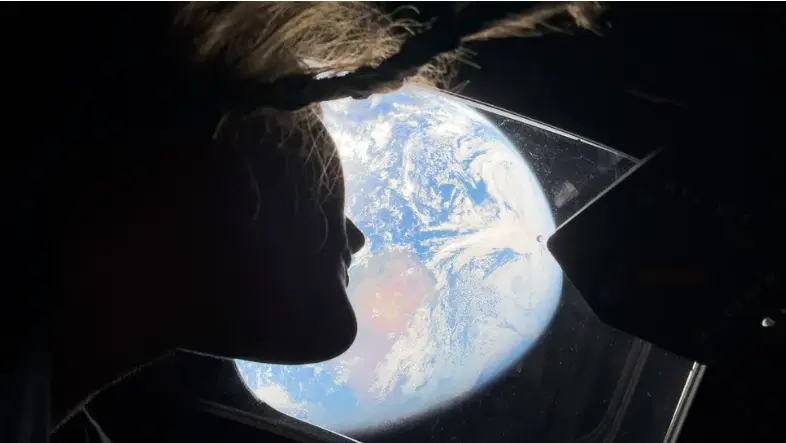
The first images captured in deep space using the iPhone 17 Pro Max have now been released, offering a striking glimpse of Earth and the Moon from NASA’s ongoing Artemis II mission.
First Space Photos from a Consumer Smartphone
According to a report by TechRadar, astronauts aboard the Artemis II spacecraft have begun sending back photographs taken using the iPhone 17 Pro Max. The images include views of Earth from thousands of miles away, captured as the Orion spacecraft travels toward the Moon.
Some of these photos were taken using the phone’s front-facing camera, showing astronauts like Christina Koch and Reid Wiseman with Earth visible in the background a modern take on space “selfies.”
Breathtaking Views of Earth and the Moon
NASA has also released images of the Moon, including detailed views of surface features such as the Orientale Basin. These visuals mark one of the first times such perspectives have been directly observed and documented by humans during a crewed mission in decades.
The spacecraft is traveling at extremely high speeds and is expected to reach distances exceeding 400,000 kilometers from Earth, making these images some of the farthest-ever captured by humans using a smartphone.
Smartphones as Space Cameras
Each astronaut on the Artemis II mission has been equipped with an iPhone 17 Pro Max, following rigorous safety testing by NASA. The devices are primarily being used for photography and video recording, with connectivity features like internet and Bluetooth disabled for safety.
This marks a major shift in how space missions are documented. Traditionally, astronauts relied on specialized cameras, but modern smartphones now offer advanced imaging capabilities powerful enough for space use.
A Blend of Consumer Tech and Space Exploration
The inclusion of smartphones highlights how far consumer technology has evolved. High-resolution sensors, computational photography and compact design make devices like the iPhone 17 Pro Max viable tools even in extreme environments.
NASA’s decision also reflects a broader trend of integrating commercial technology into space missions both to enhance flexibility and to make space exploration more relatable to the public.
A Historic Moment for Photography
The Artemis II mission, launched on April 1, 2026, is the first crewed journey around the Moon in over 50 years. While it serves as a test flight for future lunar landings, it is also quietly redefining how such missions are documented.
With astronauts now capturing moments using the same type of device millions use on Earth, the boundary between everyday technology and space exploration continues to blur bringing humanity closer to the experience of space than ever before.
iPhone 17
